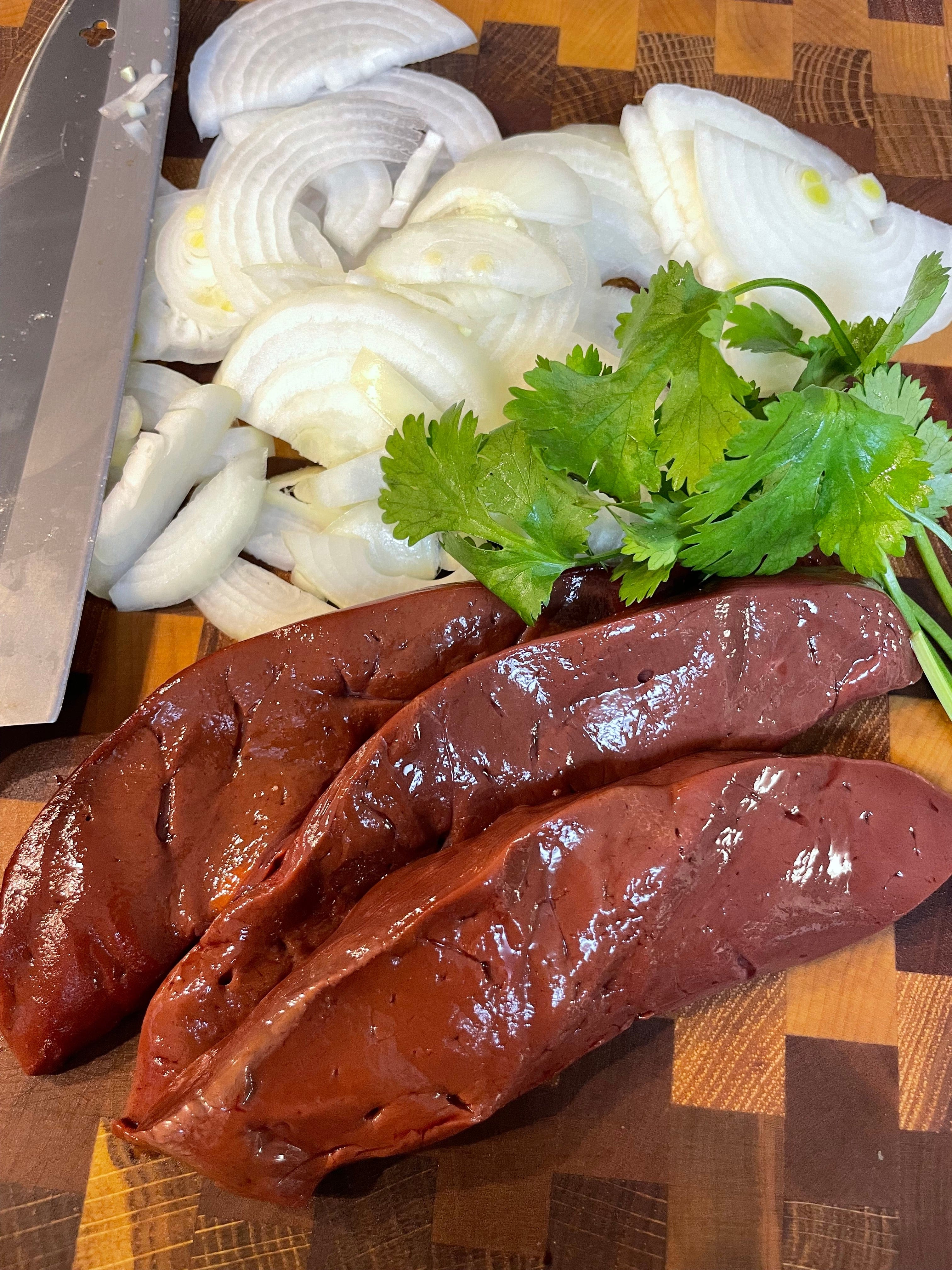
Bison Liver

Bison Liver and Onions (Classic Recipe, No Bitterness)

The classic liver and onions, done right: a quick milk soak to mellow the flavor, a seasoned flour dredge, and a fast pan-fry that leaves the bison liver slightly pink inside. Twenty minutes to one of the most nutrient-dense meals you can cook — tender, sweet with Vidalia onions, and nothing like the overcooked liver you remember.

At a glance

Recipe Overview

An Easy American recipe from the American West — about 25 minutes of active time, plus an overnight dry brine.

Prep

10 minutes

Cook

15 minutes

Total

25 minutes

Yield

3–4 servings

Pull temp

Slightly pink inside — about 140–145°F

About This Recipe

Liver and onions has a reputation problem, and the reputation was earned by bad technique — liver cooked gray all the way through turns grainy and bitter, and a generation swore off it. Cooked correctly, bison liver is a different food entirely: tender, mildly sweet against the caramelized onions, and finished while still slightly pink at the center, which is the entire secret.

If you're here for the nutrition, the reputation is deserved in the other direction. Liver is the most nutrient-dense food on the animal — loaded with iron, vitamin A, B12, and folate at levels no muscle meat approaches — and liver from grass-fed, pasture-raised bison is about as clean a source as exists. This is the original superfood, decades before the word.

Two small steps do all the heavy lifting: a short milk soak, which mellows any metallic edge and is non-negotiable for first-timers, and a seasoned flour dredge that gives each slice a delicate crust and keeps the interior creamy. From soak to plate is about twenty minutes.

What you’ll need

Ingredients

  • 1 lb bison liver, sliced about ½ inch thick
  • ¾ cup milk, for soaking
  • 2 tbsp butter, divided
  • 1 large Vidalia onion, sliced into rings
  • 1 cup all-purpose flour
  • 1 tsp salt
  • ½ tsp black pepper

Instructions

  1. Soak the liver. Rinse the slices, pat dry, and submerge them in the milk while you cook the onions — 10–15 minutes is enough to mellow the flavor and tenderize.
  2. Cook the onions. Melt 1 tablespoon of the butter in a large skillet over medium heat and cook the onion rings, stirring occasionally, 3–5 minutes until soft and golden at the edges. Set them aside on a plate.
  3. Dredge. Stir the salt and pepper into the flour on a shallow plate. Drain the liver, let the excess milk drip off, and coat each slice lightly in the seasoned flour, shaking off the extra.
  4. Fry the liver. Melt the remaining butter in the same skillet over medium-high. Fry the slices 3–4 minutes per side, until the crust is deep golden and the centers are still slightly pink. Work in batches rather than crowding the pan.
  5. Bring it together. Return the onions to the pan for a minute to heat through, spoon them over the liver, and serve immediately — liver waits for no one, and it's at its best straight from the skillet.

Pro tip: The line between silky and grainy is about one minute of cooking. Pull the liver while the center is still pink — around 140–145°F if you want a number — because it firms up fast in the residual heat. Overcooked liver is what gave liver its reputation; don't re-earn it.

What to Serve with Liver and Onions

Mashed potatoes are the classic partner — they catch the buttery onions and pan drippings. Crusty bread, buttered egg noodles, or simple green beans all work the same shift. A squeeze of lemon or a dash of apple cider vinegar right before serving brightens the richness more than you'd expect.

How to Store and Reheat Leftover Liver

Liver is genuinely best fresh from the pan — plan portions accordingly. Leftovers keep 1–2 days refrigerated; reheat very gently in a covered skillet over low heat, just to warm, since a second hard cook turns it grainy. Cold leftover liver also blends into an excellent quick pâté with a little softened butter.

More Bison Recipes to Try

If nutrient density brought you here, the rest of the animal delivers too — start with the [grilled bison steak guide] or keep it slow with the [slow cooker bison roast]. We raise every animal on our own pasture and believe in using all of it; [find liver and other cuts here] while they're in stock.

Bison Cooking FAQs

New to cooking bison? These are the questions we hear most from customers — doneness temps, technique, and how bison differs from beef. If we didn't cover yours, reach out and we'll get back to you.

Questions about your order or our bison? Email us — we're a family ranch, and a real person reads every message.Average answer time: 24h