
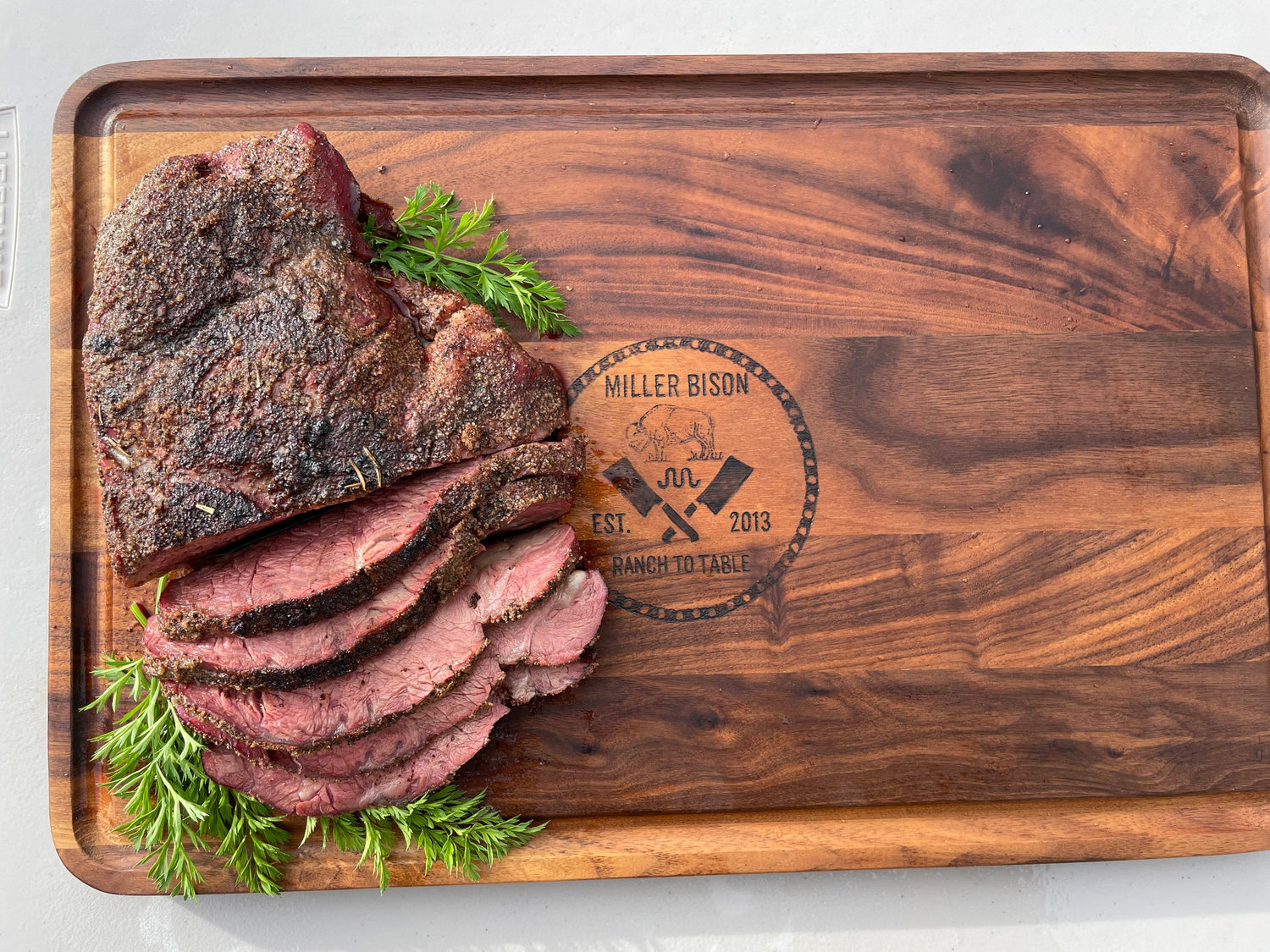
Bison doesn't taste gamey. Overcooked bison tastes gamey — or at least tastes like regret — and since most people's first bison was cooked by someone treating it like an 80/20 chuck burger, the rumor persists.
Here's the entire secret, and then we'll unpack it: bison is lean, and lean meat is honest. Beef fat is a safety net — it bastes, it insulates, it forgives. Bison works without the net. Cook it with a little intention and it's some of the easiest, best meat you'll ever make. Cook it on autopilot and it'll tell on you.
One rule. Two methods. A few numbers. That's the whole guide.
The One Rule: Pull It Early
Whatever you're cooking and however you're cooking it, bison finishes before beef does. Less fat means heat moves through it faster and there's less buffer between "perfect" and "past it."
So the rule is: whatever doneness you like in beef, aim one notch earlier with bison, and check sooner than feels natural. That single habit prevents ninety percent of bad bison experiences.
The official word, for the record: USDA guidance is 145°F for whole cuts with a three-minute rest, and 160°F for ground meat. That's the food-safety line. Most people who cook bison for a living pull steaks in the medium-rare neighborhood — call it 125–130°F before resting — because that's where a lean steak eats best. Where you land between rancher practice and official guidance is your call to make; we're just telling you where the flavor lives.
Method One: Hot and Fast
For steaks, burgers, and anything tender: high heat, short time, early exit.
Get the pan or grill properly hot before the meat touches it — a lean steak needs the sear to happen fast, before the inside overshoots. Salt it, sear it hard on both sides, and start checking temperature earlier than pride suggests. A thinner bison steak can blow past medium-rare in the time it takes to answer a text.
Then rest it, five minutes or so, loosely covered. Resting isn't a chef affectation — it's the difference between juice in the meat and juice on the cutting board, and lean meat has none to donate.
Method Two: Low and Slow
For roasts, brisket, stew meat, and anything from a hardworking muscle: low heat, long time, liquid or wrap for protection.
Connective tissue breaks down with time and gentle heat regardless of how lean the meat is — that's why a bison chuck roast in a slow cooker or a braised brisket turns silky when a rushed one turns tough. The lean-meat adjustment is simply protecting moisture while time does its work: braise in liquid, wrap on the smoker, lid on the Dutch oven. Give the collagen its hours and bison rewards you exactly like beef does, minus the grease slick.
What lean meat won't tolerate is the middle path — medium heat, medium time, no protection. That's the zone where bison dries out, and it's where most first attempts go wrong. Commit to fast or commit to slow.
Ground Bison: The Easy Mode
Ground is the most forgiving format and the right place to start. Two notes:
It browns quicker than ground beef — less fat to render means the pan gets where it's going sooner, so stay close. And there's almost no grease to drain, which feels strange the first time and excellent every time after. Burgers benefit from a light touch: don't smash them thin, don't press them on the grill, and pull them a shade early like everything else.
Buy a Thermometer. Seriously.
Every other tip in this guide is negotiable. This one isn't. An instant-read thermometer costs less than one ruined ribeye and removes all the guessing from a category of meat where guessing is the main risk. Poke, read, decide. The people who "just know" when meat is done are mostly people with thermometers in their apron pocket.
The Bottom Line
Bison isn't fussy — it's honest. Hot and fast or low and slow, pull it early, rest it, and trust the thermometer over the clock. Do that once and the "bison is hard to cook" myth dies in your kitchen the way it should have died everywhere years ago.
Cooking questions about a specific cut in your freezer? 1-775-318-0366. Yes, people really do call mid-cook. Yes, we pick up.

Leave a comment
This site is protected by hCaptcha and the hCaptcha Privacy Policy and Terms of Service apply.