
The gap between lunch and dinner is where good eating goes to die.
Nobody plans to eat badly at 3:30 in the afternoon. It just happens — you're between meetings, or between the job site and the gym, or four hours into a drive across Nevada, and suddenly you're standing in a gas station reading the word "protein" on something that is, structurally speaking, a candy bar. Twenty grams of sugar, an ingredient list like a chemistry final, and a picture of an athlete on the wrapper doing the believing for you.
The fix isn't more willpower. It's making sure the thing within arm's reach is actual food. That's the whole philosophy of the snack drawer: stock it once, stock it right, and the 3:30 decision makes itself.
What Actually Counts as a Carnivore Snack
Simple test: it should be meat. Not meat-flavored, not meat-adjacent, not a protein isolate that once waved at a cow. Meat, maybe salt and seasoning, and a short list of anything else.
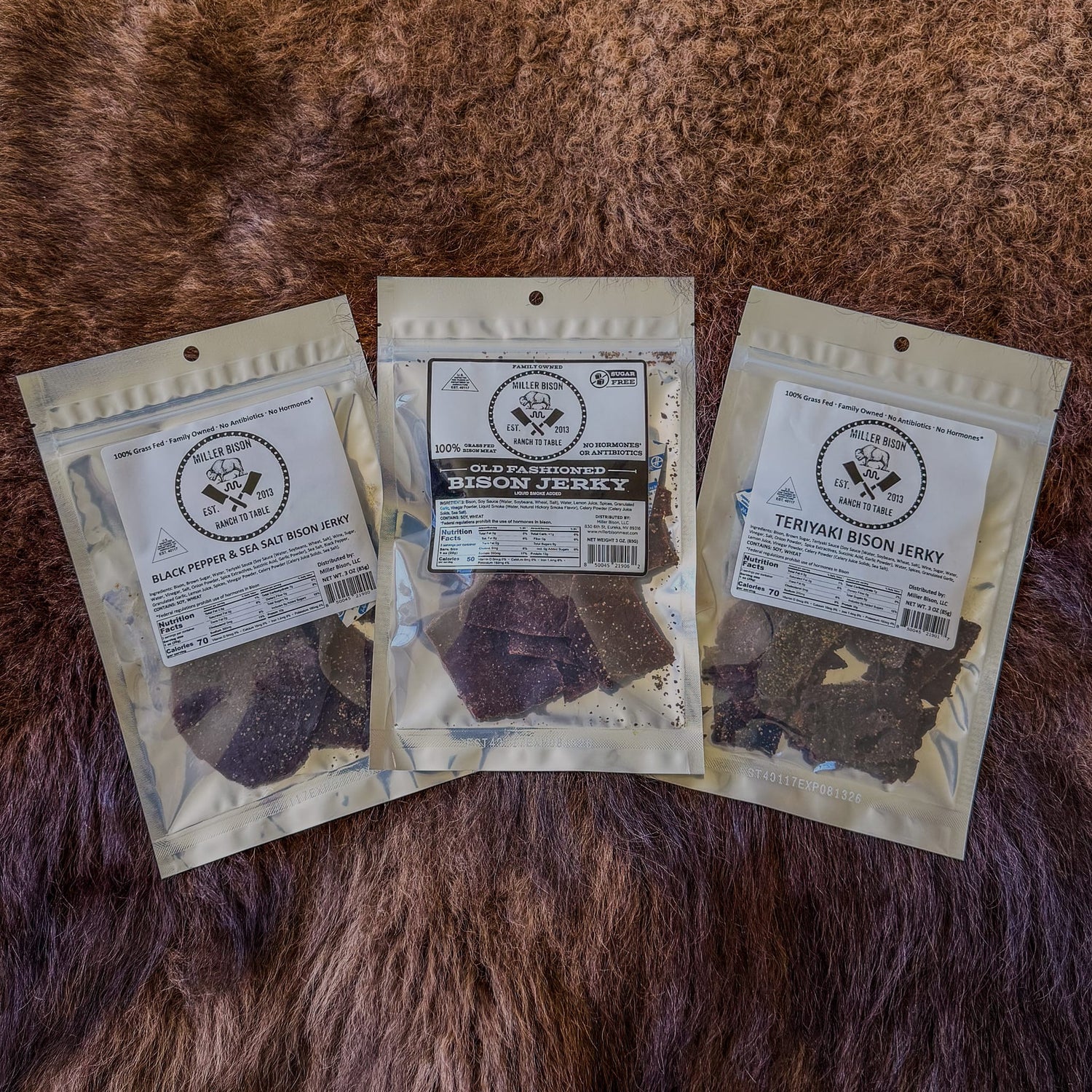
That test disqualifies most of the snack aisle immediately, including a lot of jerky. Flip a bag of mass-market jerky over sometime and count how many ingredients you can't pronounce and how much sugar snuck in — plenty of teriyaki jerky is closer to candy with a meat filling than meat with a flavor. If the second ingredient is sugar, it's dessert. Nothing wrong with dessert. Just don't let it wear the protein costume.
The real thing is out there, it just doesn't dominate the shelf, because meat that's mostly meat is expensive to make and doesn't survive on a gas station rack for two years. Which is exactly the point.
Why Bison Is Built for This Job
We covered the full bison-versus-beef breakdown elsewhere, but the short version matters here: bison is one of the most protein-dense meats you can eat — nearly the same protein as beef with a fraction of the fat and calories. Now dry it. Dehydration is a concentration trick: take lean meat, remove the water, and what's left is about as much protein per ounce as food gets.
That density is why a bag of bison jerky does a job a shake can't. It doesn't need refrigeration, doesn't melt in a hot truck, doesn't care if it lives in a gym bag for two weeks, and flies through airport security without a second look. It's the rare protein source that works everywhere your day actually happens instead of only where your kitchen is.
Ours starts as the same grass-fed, grass-finished bison we sell as steaks — one herd, one ranch, no mystery trim from six countries. The snack is only as good as the animal it came from, and we know exactly which pasture ours came from.
The Drawer, the Bag, the Console
Where this stuff earns its keep:
The gym bag. The window right after training is a bad time to be twenty minutes from food. A meat stick in the side pocket beats the vending machine every single time, and it's protein your body recognizes on sight.
The truck console. Long drives are ambush territory — every exit is a value meal. A bag of jerky in the console is the difference between arriving hungry and arriving fed.
The desk drawer. The 3:30 slump usually isn't a coffee problem, it's a protein problem. Lunch was six hours from dinner and something has to bridge it. Better it's meat than the office candy bowl.
The trail and the carry-on. Backpackers figured this out a century before macro tracking existed: dried meat is the original performance food. Light, dense, indestructible. Some technology peaks early.
The kid test. Meat sticks are one of the few snacks where the version kids will actually eat and the version you want them eating are the same product. No negotiation required.
The Macro Math
Jerky's numbers are almost unfair. Because the water's gone, you're looking at roughly 10–15 grams of protein per ounce, with next to no carbs when it's made right — the actual figure depends on the cut and recipe, so check the bag, but the pattern holds. A modest bag of bison jerky can quietly deliver as much protein as a chicken breast, from a package that's been rattling around a backpack since Tuesday.
For anyone eating carnivore or keto, low-carb jerky and sticks are the difference between "traveling is hard on this diet" and not thinking about it at all. For everyone else, it's the easiest protein upgrade available: change nothing about your meals, just replace what's in the drawer.
The Honest Caveats
Jerky is a bridge, not a meal. It's salty by design — salt is how you preserve meat without a lab's worth of additives — so it pairs with a water bottle, and if you're watching sodium hard, portion accordingly.
And per ounce, good jerky isn't cheap, because it can't be: it takes roughly three pounds of raw meat to make one pound of jerky, and when the raw material is grass-finished bison, the math is the math. Cost per full stomach still favors cooking real meals — that's what the freezer's for. The snack drawer isn't competing with dinner. It's competing with the gas station, and against the gas station it wins on every measure except the price of regret.
Stock It Once, Thank Yourself Daily
The whole trick is buying before you're hungry. Our carnivore snack pack exists for exactly this — jerky and meat sticks in one box, enough to load the gym bag, the console, and the desk in one pass. And if your drawer empties as fast as most people's, subscribing to a meat stick pack gets you free snacks every month for as long as you stay on it, which is our way of rewarding the people who plan ahead.
Unaltered protein from nature — sized for a pocket.
Wondering which flavors to start with? Call 1-775-318-0366 and ask Anthony. He has opinions.

Leave a comment
This site is protected by hCaptcha and the hCaptcha Privacy Policy and Terms of Service apply.