
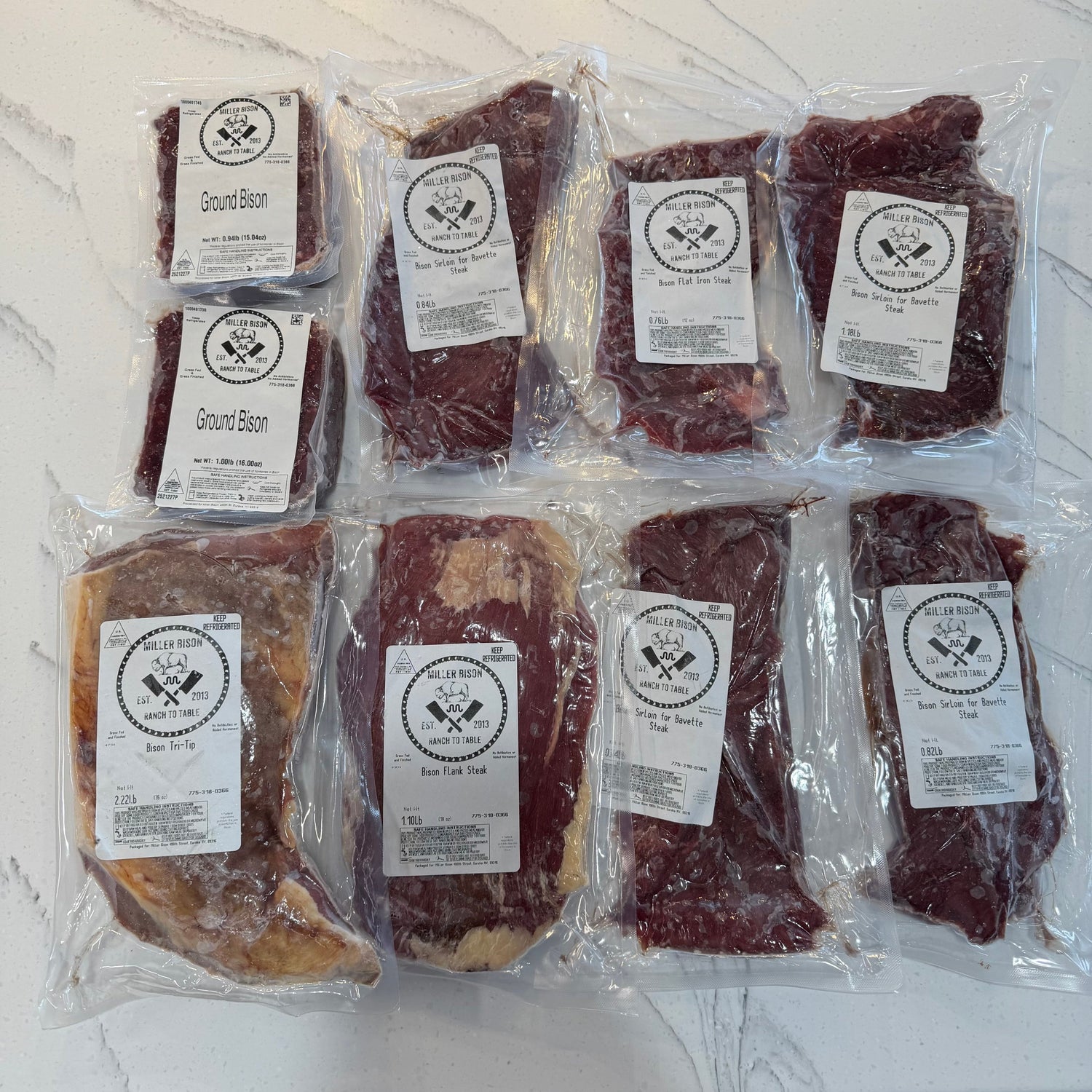
We get a lot of first-timers. People who saw bison on a menu, or heard about it from the guy at the gym who won't shut up about macros, or just got curious standing in front of the meat case. They call the ranch — the number's on every page for a reason — and mostly they ask the same handful of questions.
This page is those questions, answered in one place, by people who raise the animal. Every section here goes deeper somewhere else on this site if you want it. Consider this the trailhead.
What Bison Meat Actually Is
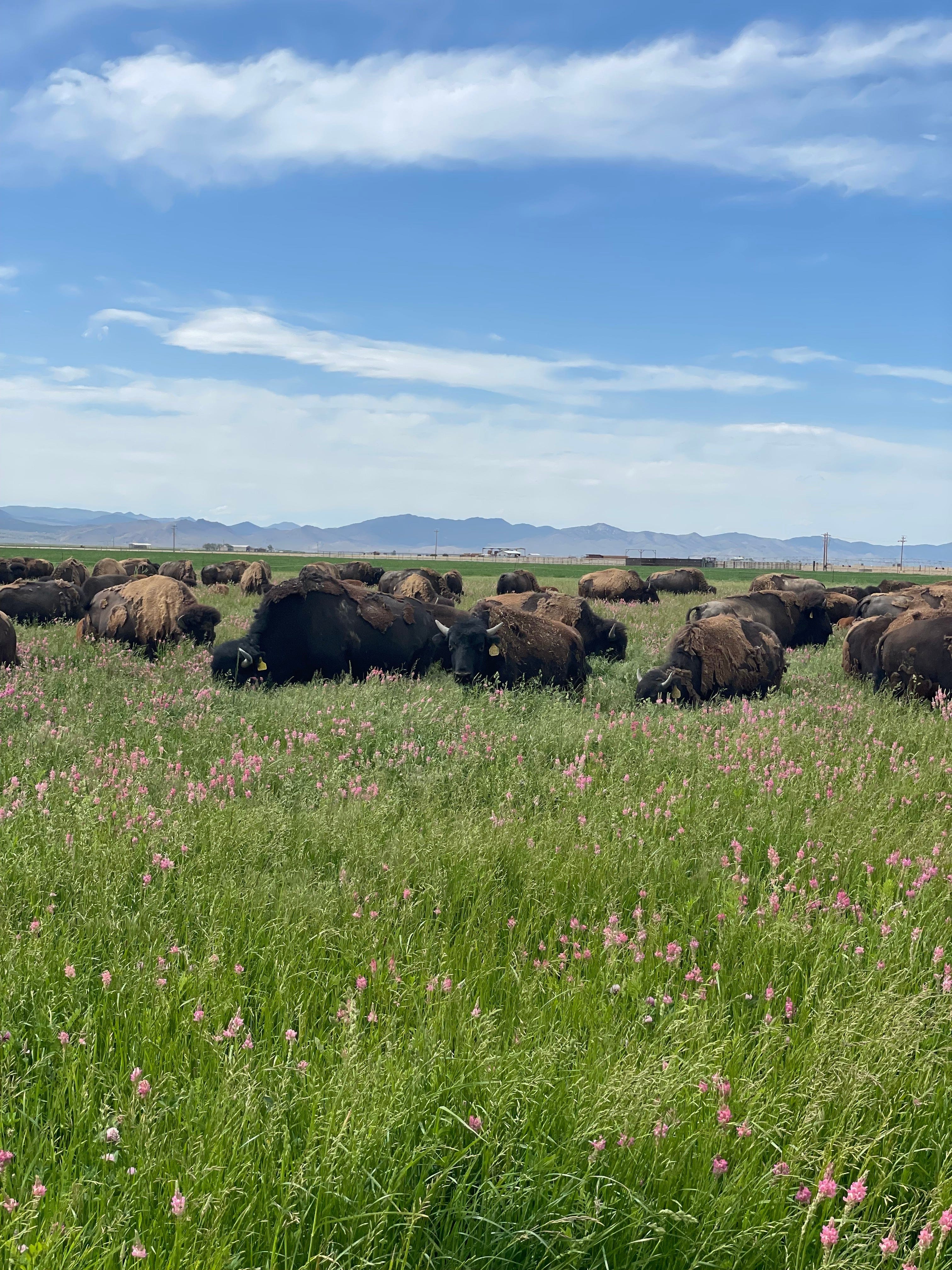
Bison is the largest land animal in North America and, for a few thousand years, the engine of the Great Plains — tens of millions of them, shaping the grassland just by living on it. The species nearly vanished in the 1800s. Ranchers and conservationists brought it back, and today a few hundred thousand roam ranches and parks across the continent. When you eat bison, you're eating an animal that never got industrialized the way cattle did. There wasn't time, and there weren't enough of them.
And yes — bison and buffalo are the same thing here. "Buffalo" is the nickname America gave the animal centuries ago and never gave back. Scientists will tell you true buffalo live in Africa and Asia. Your grandfather will tell you it's buffalo. You're both right enough.
The meat itself is a deep red — noticeably darker than beef, because bison muscle carries more myoglobin and less fat. It tastes clean and slightly sweet, closer to beef than to anything gamey, and richer than you'd expect from something this lean. Most people's honest reaction is "this is what I wanted beef to taste like."
How Bison Is Raised (and Why It Matters)
Here's the part the grocery store won't volunteer: "bison" on a label tells you the species, not the life. Plenty of commercial bison finishes in a feedlot on grain, same as commodity beef. The meaningful question is whether an animal was grass finished — pasture from start to end — and we wrote a whole guide to that distinction because it changes the fat, the flavor, and the honesty of the label.
Our answer, for the record: our herd lives on grass outside Eureka, Nevada from first day to last. No grain, no antibiotics, no hormones, on ground we manage regeneratively. That's what we mean by unaltered protein from nature — it's not a slogan so much as a description.
Is Bison Meat Healthy?
Short version: bison delivers nearly the same protein as beef with roughly a third fewer calories and a fraction of the fat, plus more iron and B12. It's one of the most protein-dense whole foods you can eat, which is why athletes and macro-counters keep finding their way to it. We put the full USDA numbers side by side in our bison vs. beef breakdown, table and all.
The one-ingredient part matters as much as the numbers. Bison is meat. Not a formulation, not a system, not a product with a mouthfeel team. In a food world that keeps getting more complicated, that's become its own kind of health claim.
A Tour of the Cuts
Bison butchers out a lot like beef, so nothing here will feel foreign — the differences are in behavior, not anatomy.
Ground bison is where almost everyone starts and where a lot of people happily stay. It works anywhere ground beef does and browns faster because there's less fat to render.
Steaks — ribeye, New York strip, sirloin, flat iron, tenderloin — are the showcase. Deep flavor, less shrink in the pan, and they reward a hot sear and an early pull.
Roasts and brisket are the low-and-slow family. Lean muscle plus patience equals some of the best eating on the animal; we wrote a full guide to bison brisket because it's become one of the most-asked-about cuts on the ranch.
Jerky and meat sticks are the travel team — the same animal, dried down to its most portable form. We covered how to stock a proper snack drawer separately.
How to Cook It Without Ruining It
One rule governs everything: bison is lean, and lean meat is honest. It won't hide your mistakes under fat the way a marbled steak will. Cook it hot and fast or low and slow, pull it earlier than you would beef, and let it rest. Do that and bison is easy. Skip it and you'll join the sad club of people who overcooked their first bison steak and blamed the bison.
We wrote a full no-nonsense cooking guide — temps, technique, and the thermometer sermon — that pairs with everything in the freezer box.
What It Costs
More than beef; less than you'd think once you do the per-meal math. Small national herd, slow grass finishing, and small-ranch economics all push the price up — and buying in bulk directly from a ranch pulls it way back down, to the point where our freezer packages land around five to six dollars per meal per person. We opened the books on the whole thing in our pricing breakdown, including when bulk makes sense and when it doesn't yet.
How to Buy It
You've got three basic routes. The grocery store — convenient, but you're trusting a label that doesn't say much. A farmers market — better, and you might catch us at markets around Nevada most weekends. Or direct from a ranch, which is the route where you can ask the person who raised the animal anything you want before you buy.
If you go direct with us: everything ships frozen and vacuum-sealed to your door, and if you're new, we put together a guide to your first bison order so you can start smart instead of starting big.
The Bottom Line
Bison is the simplest premium food there is: one animal, raised on grass, cut like beef, leaner than beef, with a story that runs deeper in this continent than agriculture itself. Everything else on this site is detail. Good detail — we're proud of the detail — but detail.
Start with ground. Work up to steaks. Call if you get stuck.
1-775-318-0366. If Anthony's out with the herd, leave a message — he actually calls back.

Leave a comment
This site is protected by hCaptcha and the hCaptcha Privacy Policy and Terms of Service apply.