
Let's answer the question before we explain it, because nothing's more annoying than a pricing article that makes you scroll for the price.
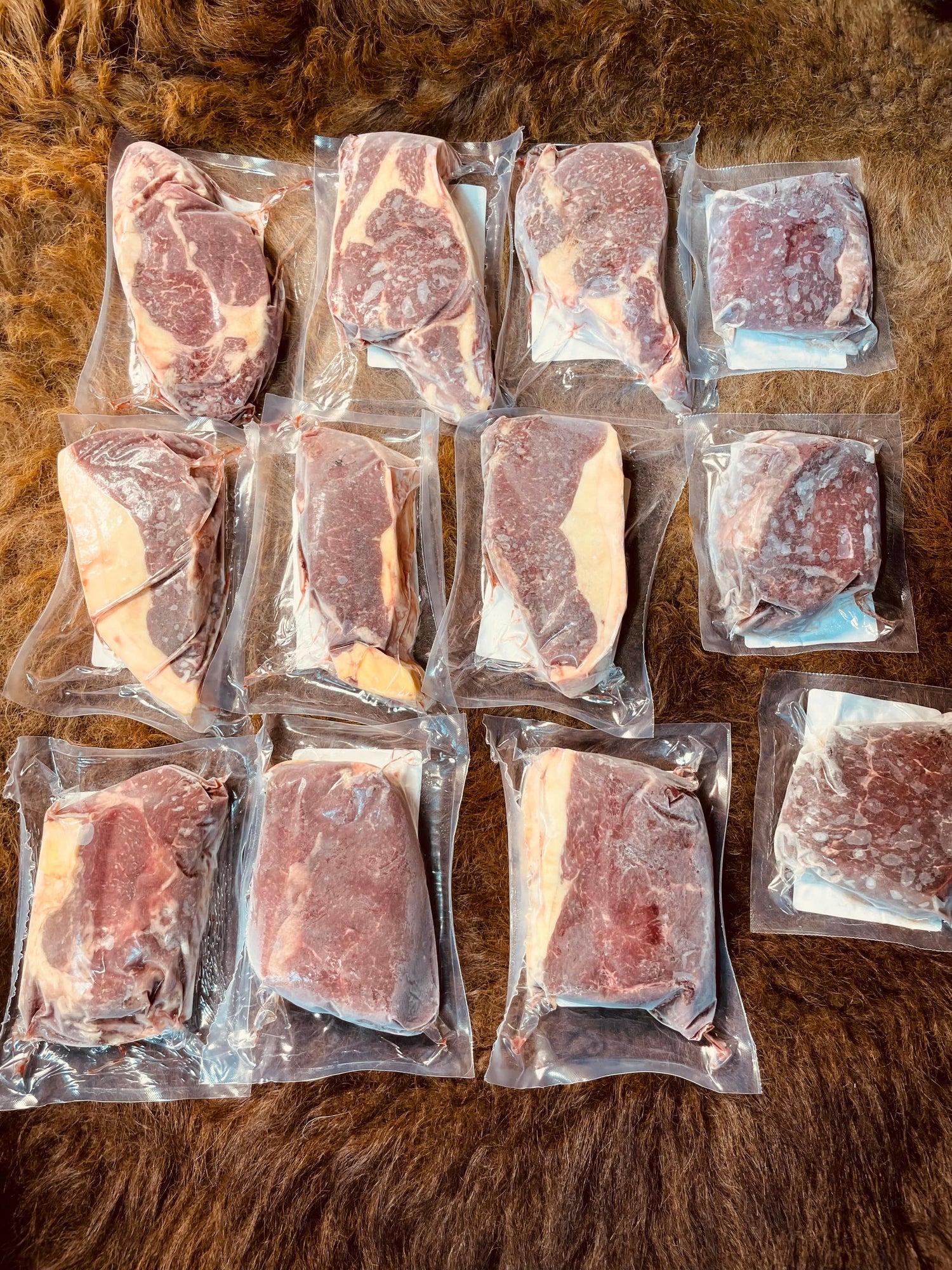
As a rough national picture: ground bison typically runs $9–15 a pound at retail. Steaks climb from there — sirloins and flat irons in the $15–25 range, premium cuts like ribeye and tenderloin north of that. Buy in bulk, straight from a ranch, and the math changes a lot: our freezer packages work out to roughly $4.87–$6.09 per meal per person, which is a number that surprises people who just walked past the bison at the grocery store.
Yes, that's more than beef. Usually somewhere between one-and-a-half and two times more, cut for cut. The interesting question isn't whether bison costs more — it's why, and whether the why is worth it to you. We raise these animals for a living, so here's the honest version.
Quick Note: Bison, Buffalo, Same Price Tag
People search for "buffalo meat cost" about as often as "bison meat cost," so let's clear it up: in America, bison and buffalo are the same animal. Technically the true buffalo live in Africa and Asia, but "buffalo" has been the working nickname here since before anyone thought to correct it. Whatever you call it, the numbers below apply.
Reason One: There Just Aren't That Many Bison
This is the big one, and most people have no idea how lopsided it is.
The U.S. cattle herd runs in the tens of millions of animals. The entire American bison herd — every ranch, every conservation herd, all of it — is a few hundred thousand. The beef industry processes more cattle in a single day than the bison industry does in an entire year. That's not an exaggeration; it's roughly the actual math.
Small supply means none of the economies of scale that make beef cheap. There's no commodity bison market, no vast processing infrastructure, no fleet of dedicated feedlots driving costs down. Every efficiency the beef industry spent a century building, bison ranchers mostly do without. Meanwhile demand keeps climbing — we've watched our own sales roughly double year over year, to the point where running out of meat before the season ends is a real planning problem. Strong demand chasing scarce supply does exactly what you'd expect to prices.
Reason Two: Bison Take Their Time
A feedlot steer is pushed to market weight fast — grain does that. A grass-finished bison gets there on its own schedule, typically somewhere past the two-year mark, sometimes well past it.
Every extra month is real money: more grazing, more water, more care, more time before the animal earns a dollar. We wrote about why we refuse to shortcut that with a feedlot finish — the short version is that the finishing period decides the quality of the fat on your plate, and we're not trading that for a faster turnaround. Slow is a feature. Slow is also expensive.
Reason Three: Small Ranches Pay Retail for Everything
When you're a big operation, everything gets cheaper — trucking, processing, packaging, feed, all of it. When you're a family ranch with a hundred-some head on 320 acres, you pay what things cost. USDA-inspected processing for bison often means longer hauls to fewer facilities. Vacuum sealing, freezing, and shipping frozen meat across the country in one to three days isn't cheap either, and we eat that shipping cost rather than passing it on as a line item.
None of this is a complaint. It's just where the money goes. When you buy from a ranch like ours, you're not paying for ad campaigns and middlemen. You're paying for time, ground, and the fact that somebody drove to Eureka, Nevada in January to break ice off a water trough.
The Better Question: Cost Per What?
Price per pound is the sticker. It's not the whole story.
Bison is denser eating than beef — nearly identical protein with a fraction of the fat and calories, which we broke down cut by cut in our bison vs. beef post. Lean meat doesn't shrink into the pan the way fatty meat does, so a pound of ground bison puts more actual food on plates than a pound of 80/20 beef. Measure by protein per dollar instead of pounds per dollar and the gap between bison and quality beef narrows considerably.
And if you're comparing against anything in the "clean protein" aisle — grass-fed protein powders, fancy bars, the whole ecosystem — bison stops looking expensive at all. It's one of the few things in that conversation that's just an animal and a label with one word on it.
When Bulk Buying Actually Makes Sense
The single biggest lever on bison pricing is buying volume. This is where that $4.87–$6.09 per meal number comes from.
A 1/8 bison lands you 45–50 pounds of vacuum-sealed cuts — steaks, roasts, ground — in about two cubic feet of freezer space. That's a standard kitchen freezer, not a chest freezer in the garage. A 1/4 or a whole animal drops the per-meal cost further, and right now the bigger packages come with a free freezer, which quietly deletes the main objection people have to buying bulk meat.
The honest guidance: if you're new to bison, don't start with a quarter animal. Start with ground or a sampler, make sure your household actually loves it (they will, but confirm), then do the bulk math. Bulk is how families who eat bison weekly afford to eat bison weekly.
If you're somewhere in between, our protein club splits the difference — regular deliveries, 5% back on everything, no freezer Tetris required.
The Honest Caveat
If lowest cost per pound is your only metric, beef wins and it's not close. That's fine — beef fed this country for a long time and we raised plenty of it ourselves before the bison took over the place.
Bison is for people optimizing something else: leaner protein, cleaner raising, fat worth eating, and a supply chain short enough that you can call the person who raised your dinner. Speaking of which —
Questions about which package fits your freezer and your family? Call us at 1-775-318-0366. Anthony's given the freezer-math talk more times than he can count, and he's happy to give it again.

Leave a comment
This site is protected by hCaptcha and the hCaptcha Privacy Policy and Terms of Service apply.