
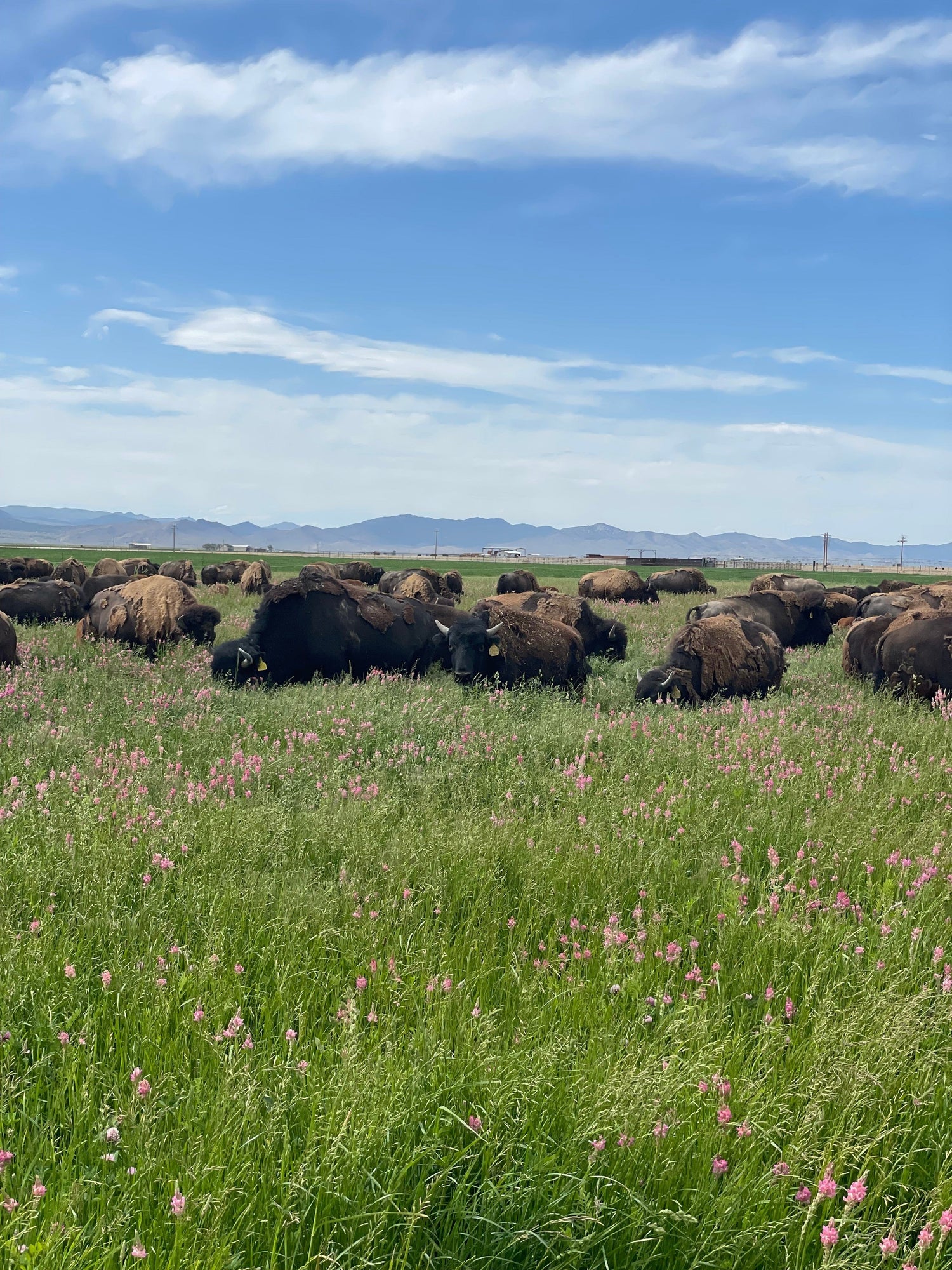
Most people who buy bison at the grocery store assume they're buying an animal that lived on grass. Big shaggy head, open plains, the whole picture on the package. Here's the part the package leaves out: a lot of commercial bison spends its last few months in a feedlot eating grain, same as commodity beef.
The word "bison" tells you the species. It tells you nothing about how the animal lived. And how the animal lived is most of what you're paying for.
We raise our herd grass fed and grass finished on pasture outside Eureka, Nevada, so yes, we have a horse in this race. But we'd rather explain the difference and let you decide than let a label do your thinking for you.
Three Terms That Sound the Same and Aren't
Grain-finished means the animal started on pasture — nearly all of them do — and then moved to a feedlot for the final stretch, typically the last three or four months, to fatten up fast on grain. Faster weight gain, more marbling, quicker turnaround. This is how most beef is raised and how a surprising amount of bison is too.
Grass-fed means the animal ate grass and forage. Sounds airtight. It isn't. The USDA actually withdrew its official grass-fed marketing standard back in 2016, which left the term loosely policed. An animal can be marketed as grass-fed on some pretty generous interpretations, and the label alone doesn't guarantee it never saw a grain bucket.
Grass-finished is the term that closes the loophole. It means grass and forage from weaning to harvest. No feedlot chapter at the end of the story. If a ranch means it, they'll say it — "grass fed and finished" — because they know the difference and they're proud of it.
Quick rule of thumb: the finishing is the part worth asking about. Everything eats grass at the beginning. What matters is what happened at the end.
Why the Last Few Months Change the Meat
Finishing isn't a technicality. It's the period when the animal lays down most of its fat, which means it's the period that decides what kind of fat ends up on your plate.
Grass-finished meat consistently shows a better omega-3 to omega-6 balance and more CLA (conjugated linoleic acid) than grain-finished meat. Grain finishing tips the fat profile the other way — more omega-6, the fatty acid most of us already get far too much of from the rest of the modern diet.
With a naturally lean animal like bison, this matters more, not less. There isn't much fat in a bison to begin with. When the whole appeal of the meat is that it's lean, letting the small amount of fat it does carry come from grain feels like buying a sports car and filling it with the cheap stuff.
There's a flavor difference too. Grass-finished bison tastes cleaner and slightly richer — closer to what the animal actually is. Grain finishing makes everything taste a little more like everything else. Some people prefer that sameness. We'd rather the meat taste like the place it came from.
Why Most Bison Gets Grain-Finished Anyway
Simple: math. Grain puts weight on an animal faster than grass does. A grain-finished bison reaches market weight sooner, which means quicker turnaround and more predictable supply. Bison demand has been outrunning supply for years — the whole industry is small, a rounding error next to cattle — so the pressure to finish fast is real.
We get it. We just don't do it. Our bison take the time they take, grazing this ground until they're ready. It's slower and it costs more to raise them this way. It's also the entire point. If we wanted to run a feedlot, there are easier animals to do it with.
What Grazing Does for the Land
There's a version of this that gets left out of most label conversations: bison and grassland built each other. These animals shaped the American plains for thousands of years — grazing, moving, fertilizing, moving again. Managed well, a bison herd doesn't just live on pasture, it improves it.
We run our place regeneratively, converting more of our 320 acres into managed pasture as the herd grows. Healthier ground grows better forage, better forage raises better animals, and better animals are the whole business. A feedlot breaks that loop. Keeping animals on grass keeps it turning.
You don't have to care about any of that to enjoy a ribeye. But if you're going to pay ranch prices, it's worth knowing whether you're funding a pasture or a pen.
How to Know What You're Actually Buying
You don't need to become a label lawyer. A few questions sort most of it out:
Ask whether it's grass finished, not just grass fed. That one word is the tell. If the answer gets vague or pivots to something else, you have your answer.
Ask where the ranch is. A real operation will tell you the town, not the region. Ours is Eureka, Nevada, population small, and Anthony will happily tell you more about it than you asked.
And if you can buy from a ranch directly — ours or anybody's — you get to skip the label decoding entirely and just ask the person who raised the animal. That's the one form of transparency no certification can match.
The Honest Caveats
Grass-finished bison is leaner than grain-finished, which means it's less forgiving on the stove. Cook it hot and fast or low and slow, pull it earlier than you would beef, and it'll reward you. Cook it like a well-marbled feedlot steak and you'll wonder what the fuss was about.
It also costs more, for the same reason it's better: time and ground aren't cheap, and we don't rush either one. We'll break down exactly where that money goes in another post, because we think the answer holds up to daylight.
The Bottom Line
Grass-fed is a good start. Grass-finished is the finish line. If the label doesn't say both — or the rancher can't — assume there's a feedlot somewhere in the story.
Our herd lives on Nevada grass from first day to last. That's what "unaltered protein from nature" means when you follow it all the way back to the pasture.
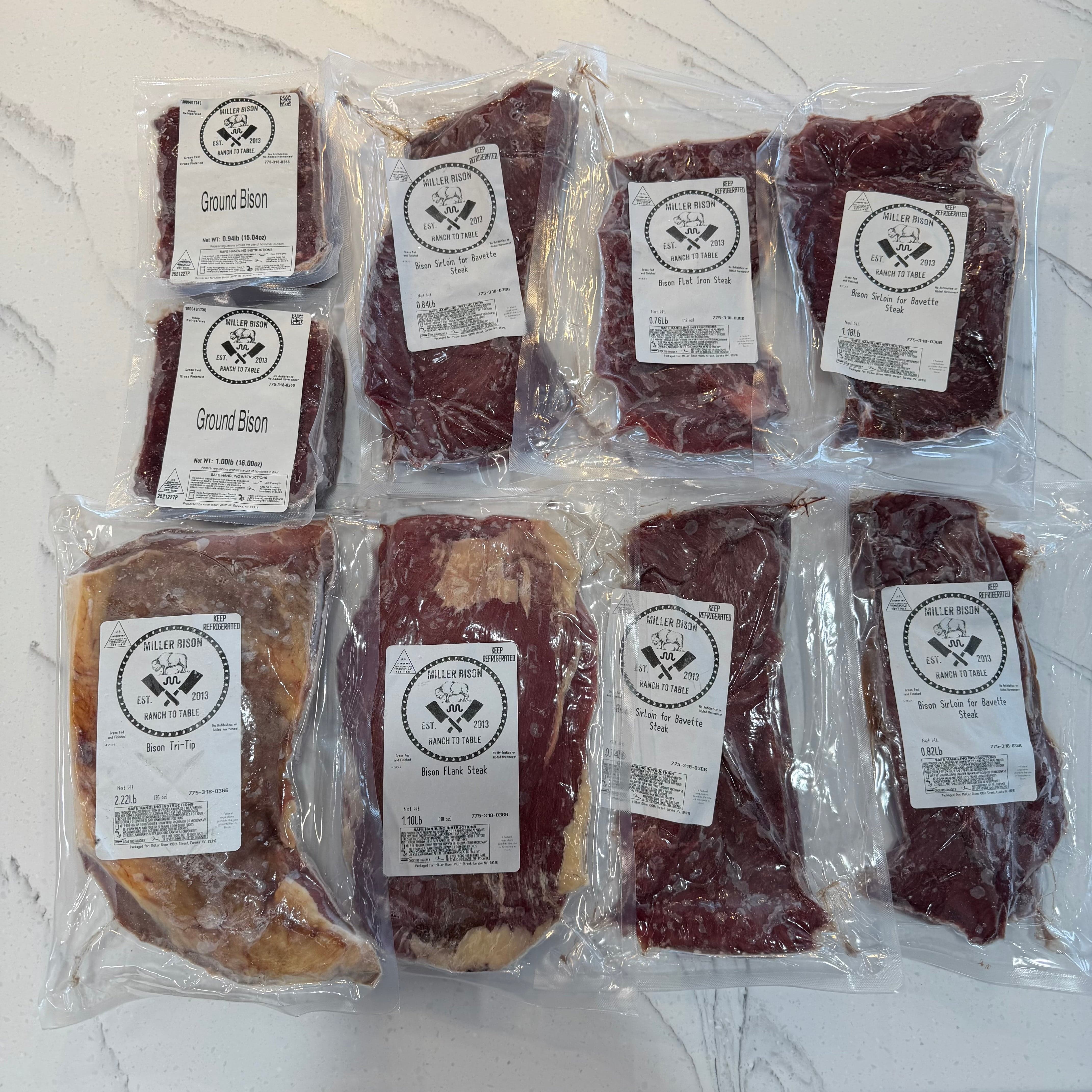
Want to taste the difference the finish makes? Start with a bundle, or call us at 1-775-318-0366 and ask Anthony anything — including the questions in this post.

Leave a comment
This site is protected by hCaptcha and the hCaptcha Privacy Policy and Terms of Service apply.