
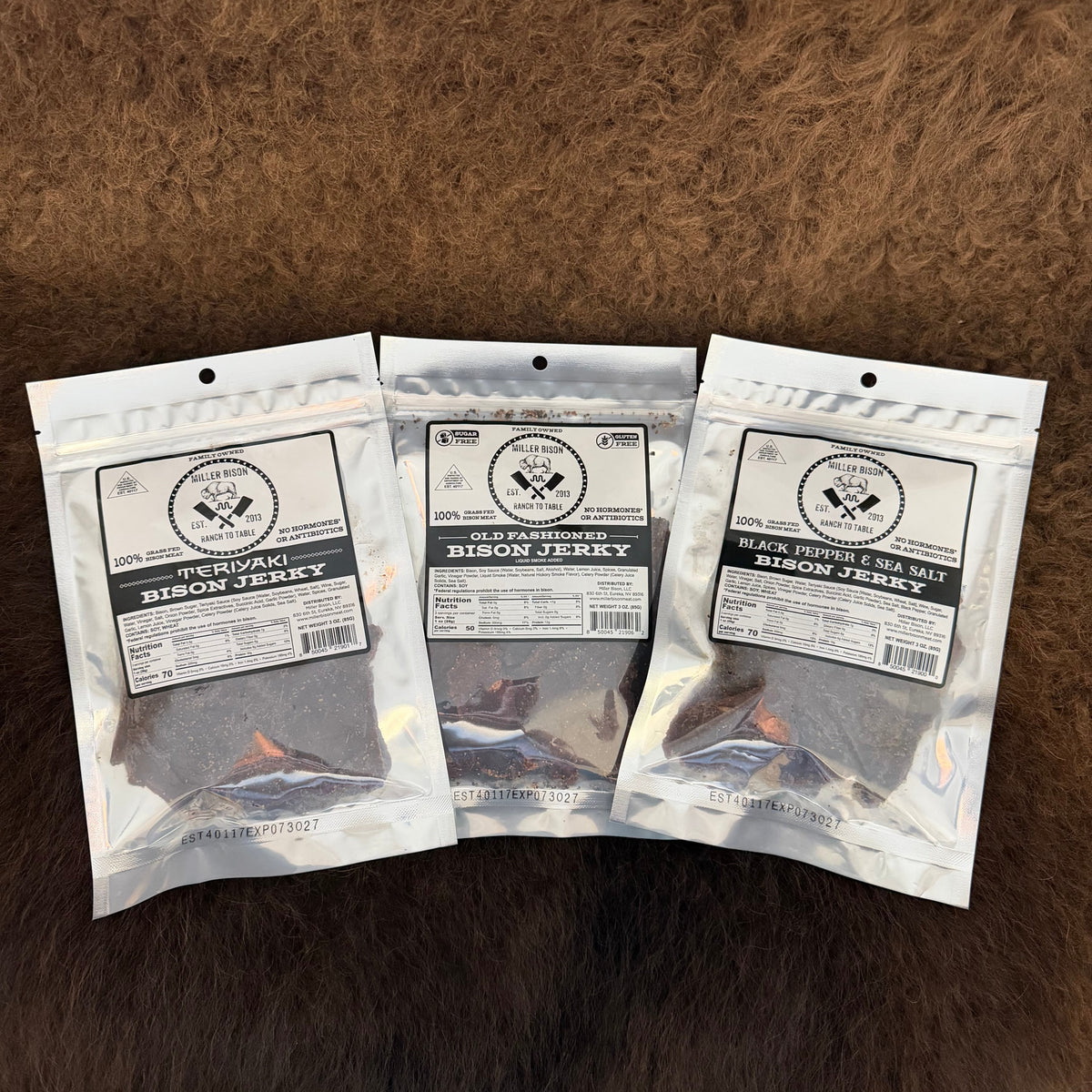
Beef jerky built the category. Every gas station rack, every road trip, every gym bag in America — that's beef's kingdom, and credit where it's due. So when people pick up a bag of ours at the farmers market, the question is never whether they like jerky. It's: what's actually different?
More than you'd think, and it starts before the smoker ever turns on.
The Animal Decides the Jerky
Here's the thing about drying meat that nobody puts on the package: fat doesn't dehydrate. Water leaves, protein concentrates, but fat just sits there — and over time, fat is what goes rancid. That's why jerky makers trim so aggressively, and it's why the leanness of the starting animal matters more for jerky than for almost any other product.
Bison is one of the leanest red meats there is - dramatically leaner than beef before anyone picks up a knife. Start leaner, and you get jerky that dries more evenly, keeps longer, and concentrates down to more protein per ounce with less of the greasy film that budget beef jerky leaves behind. The animal does half the work.
The Numbers, Ounce for Ounce
Both bison and beef jerky are protein-dense — dehydration guarantees that. The difference shows up around the edges: bison jerky typically delivers similar or better protein per ounce with less fat riding along, which matters if you're counting macros and matters more if the bag lives in a hot truck for two weeks.
Exact numbers vary by brand and recipe, so read the panel — but as a category, bison jerky runs leaner and cleaner than the beef average, for the simple reason that the raw material did.
The Flavor Question
Bison tastes like what beef fans think beef tastes like — clean, deep, slightly sweet, without the heaviness. Dry it and that character concentrates. Good bison jerky has a richness that doesn't need much help, which is why our Old Fashioned flavor is basically just meat, salt, seasoning, and smoke.
Beef jerky, especially the mass-market kind, leans harder on the marinade — and there's a reason. Commodity beef trim doesn't bring much personality, so the sauce provides it. That's not a crime. But it explains why so much beef jerky tastes like its flavor packet instead of like an animal.
The Ingredient List Tells On Everybody
Flip over a bag of typical convenience-store beef jerky and count: sugar high on the list, soy, a paragraph of preservatives. Now flip over a bag from a small ranch — bison or beef, honestly — and the list gets short. This is less a bison-versus-beef fight than a supply-chain fight: jerky made from one identifiable herd doesn't need a chemistry lab to survive the shelf, because it wasn't engineered to sit there for two years.
The bison advantage is that nearly all bison jerky comes from that small-supply world. There is no commodity bison jerky, because there's no commodity bison. Buying bison jerky almost automatically opts you out of the ingredient-list arms race. Ours comes from the same grass-fed, grass-finished herd we sell as steaks — one animal, one ranch, one short list.
The Price Difference, Explained Honestly
Bison jerky costs more than beef jerky, and the math is the same math as the fresh meat: smaller herds, slower grass finishing, no industrial-scale processing. Add the jerky-specific fact that it takes roughly three pounds of raw meat to make one pound of jerky, and premium raw material compounds fast.
Whether it's worth it depends on what you're buying jerky for. If it's road-trip filler, beef does the job. If it's your actual protein strategy — the thing between you and the gas station — the per-gram gap narrows a lot, and the quality gap doesn't.
So Which Should You Buy?
Honest answer: if you love jerky, you should probably know what the bison version tastes like, because it's the version where the meat itself is the point. Start with the Trio — one bag each of Old Fashioned, Teriyaki, and Black Pepper & Sea Salt — and let the household fight it out. We also covered how jerky fits into a full snack strategy in our carnivore snack guide.
Beef jerky built the category. Bison jerky is what the category grows up into.
Questions about flavors or ingredients? Call 1-775-318-0366 — Anthony eats more of the inventory than he'd like us to print.

Leave a comment
This site is protected by hCaptcha and the hCaptcha Privacy Policy and Terms of Service apply.