
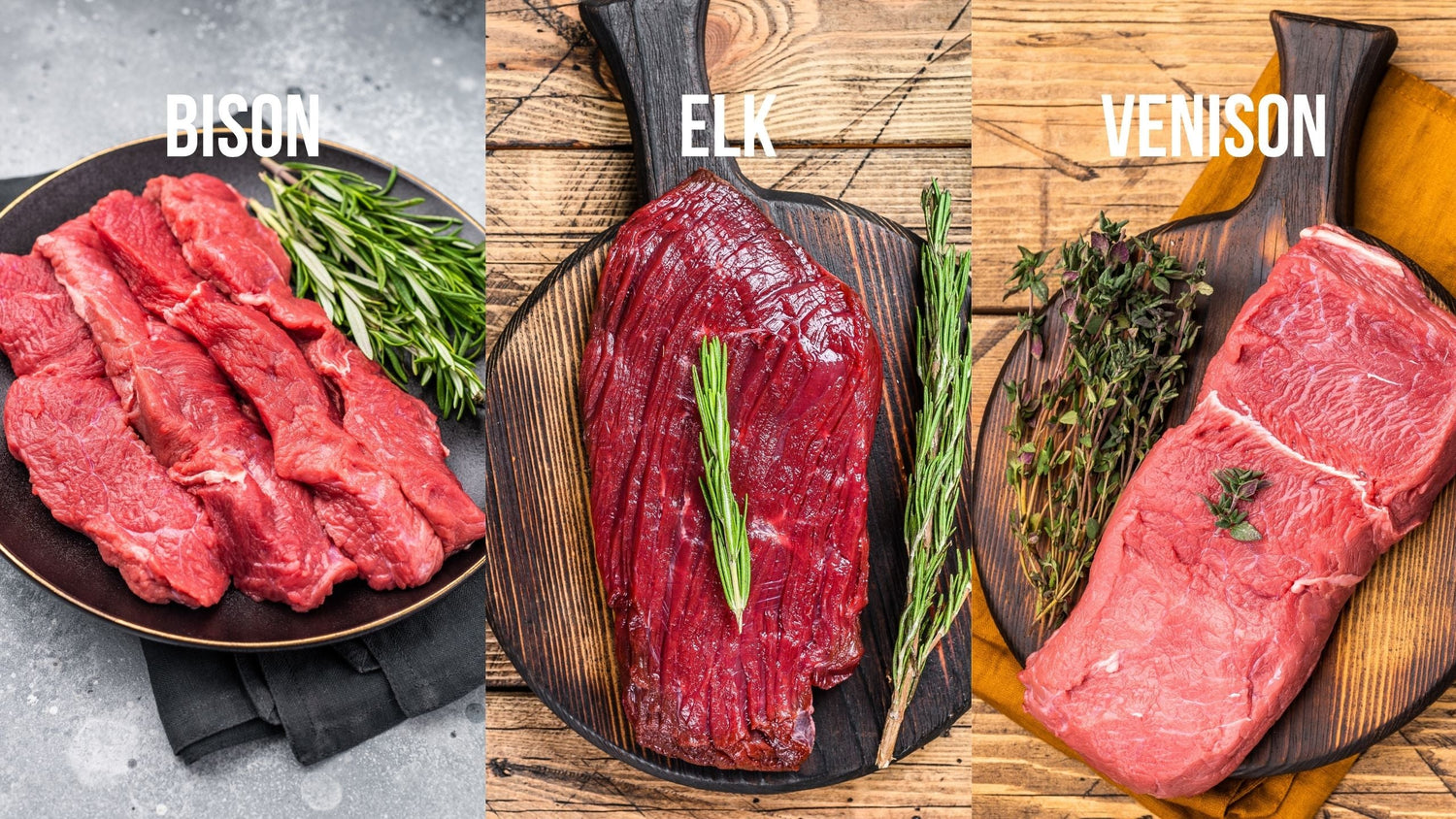
Somewhere right now, a guy at a dinner party is being handed a plate and told "it's elk, you'll love it," and he is bracing himself. That flinch — the game meat flinch — is the thing bison, elk, and venison all have in common in the public imagination. Lean, wild, vaguely intimidating, probably "gamey," whatever that means.
We raise bison, so we live inside this category, and here's what we've learned selling it to thousands of first-timers: the big three lean red meats get lumped together constantly and deserve to be told apart. They eat differently, cook differently, source differently, and fit different freezers. So here's the full comparison — numbers, flavor, and the sourcing realities nobody explains — with our bias declared upfront and our honesty intact anyway.
Meet the Big Three
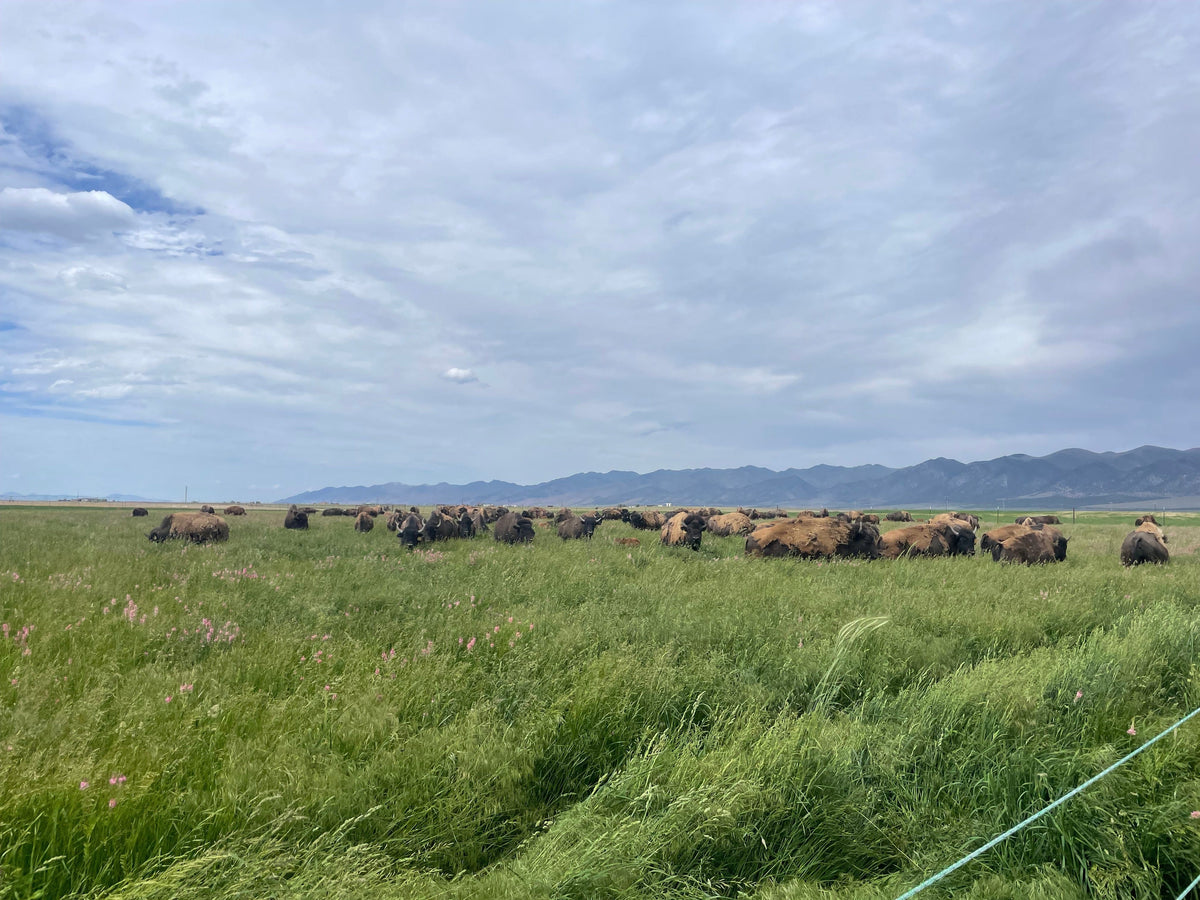
Bison is the heavyweight — the largest land animal in North America, a grazer that turns grass into deeply flavored, remarkably lean muscle. Nearly all bison sold in America is ranch-raised, and the best of it is grass-fed and grass-finished, living essentially the life the species always lived, with a fence somewhere in the distance.
Elk is the athlete — a big mountain deer built for climbing and covering country, which is exactly what its meat tastes like: lean to the point of austerity, clean, with a whisper of sweetness. Commercial elk is farm-raised on pasture, mostly in the American West and New Zealand.
Venison is the classic — deer, the original game meat, the one your hunting uncle swears by and your dinner-party host apologizes for. Its flavor runs the most distinctly "wild" of the three: earthy, mineral, herbal around the edges, shaped by a browser's diet of leaves, shoots, and acorns rather than a grazer's diet of grass.
The Sourcing Fact Almost Nobody Knows
Here's the part that surprises people: in the United States, truly wild game cannot be sold commercially. That deer your uncle got? Legal to hunt, legal to eat, illegal to sell. Every piece of venison or elk on a restaurant menu or store shelf is farm-raised — and a large share of commercial venison is actually imported from deer farms in New Zealand.
That's not a scandal; farmed elk and venison are raised well and taste great. But it reframes the romance. All three of these "wild" meats reach your plate through ranching — the real questions are the same ones you'd ask about any meat: what did the animal eat, how long did it live that way, and can anyone name the ranch? Bison happens to be the one where the answer can be a town in Nevada and a person who picks up the phone.
Nutrition: The Numbers Side by Side
All three are lean, high-protein red meats that embarrass conventional beef on the macro sheet. Per 3.5-ounce cooked lean serving, USDA figures run roughly:
|
Bison |
Elk |
Venison |
|
|
Calories |
~143 |
~146 |
~158 |
|
Protein |
~28 g |
~30 g |
~30 g |
|
Total fat |
~2.4 g |
~2 g |
~3 g |
Read that honestly and the verdict is: it's a photo finish. Elk edges out the field on pure leanness — we raise bison and we'll still say it. All three deliver iron, zinc, and B12 in quantities that make them legitimate performance foods, a case we made cut by cut in our bison versus beef breakdown.
Where bison pulls ahead is the fine print. Grass-finished bison carries a fat profile — omega-3 balance, CLA — that comes from a lifetime on pasture, and because bison is the most established of the three industries, that grass-finished standard is easiest to actually verify. With farmed elk and venison, feeding practices vary widely and labels say less. The leanest meat in the world only matters if you know what made it.
Flavor: The Real Differences
Skip the word "gamey" for a minute — it's doing too many jobs. Here's what each one actually tastes like.
Bison tastes like beef with the volume turned up and the fat turned down: clean, slightly sweet, rich without heaviness. It's the most familiar of the three by a wide margin, which is why it's the one we hand to skeptics. Nobody has ever needed convincing twice.
Elk is subtler — lean, clean, faintly sweet, with less iron-forward depth than bison. Elk's mildness is its charm and its limitation: beautifully approachable, occasionally shy.
Venison is the most assertive: earthy and mineral, with that herbal edge that comes from a browsing diet. When people say "gamey," they usually mean venison — and usually badly handled venison at that. Well-raised, well-cooked venison is distinctive, not offensive. But it is the one of the three that tastes least like anything else on your plate.
And about "gamey": most of what people call gaminess is actually mishandling — meat overcooked to gray, or wild-harvested animals processed slowly in the field. All three of these meats, properly raised and properly cooked, taste clean. The flinch is learned from bad experiences, and it unlearns in one good meal.
Cooking: One Rule, Three Strictness Levels
Every lean meat follows the same law — hot and fast or low and slow, and pull it early — but the margin for error shrinks as the fat does.
Bison is the most forgiving of the three, which is a funny thing to say about a meat we spend a whole guide telling people not to overcook. But its modest fat and beef-like muscle structure give you a real window. Sear a bison ribeye to medium-rare and it behaves like the best steak you've had.
Elk demands more attention — leaner still, faster to overshoot, happiest at rare to medium-rare with zero tolerance for distraction. Venison is the strictest of all: its combination of leanness and assertive flavor means overcooking doesn't just dry it out, it amplifies exactly the notes skeptics fear. Venison rewards experts and punishes autopilot.
If you're keeping score: bison is the one you can serve to guests the first time you cook it. The other two, maybe practice on family.
Availability and Price: The Practical Reality
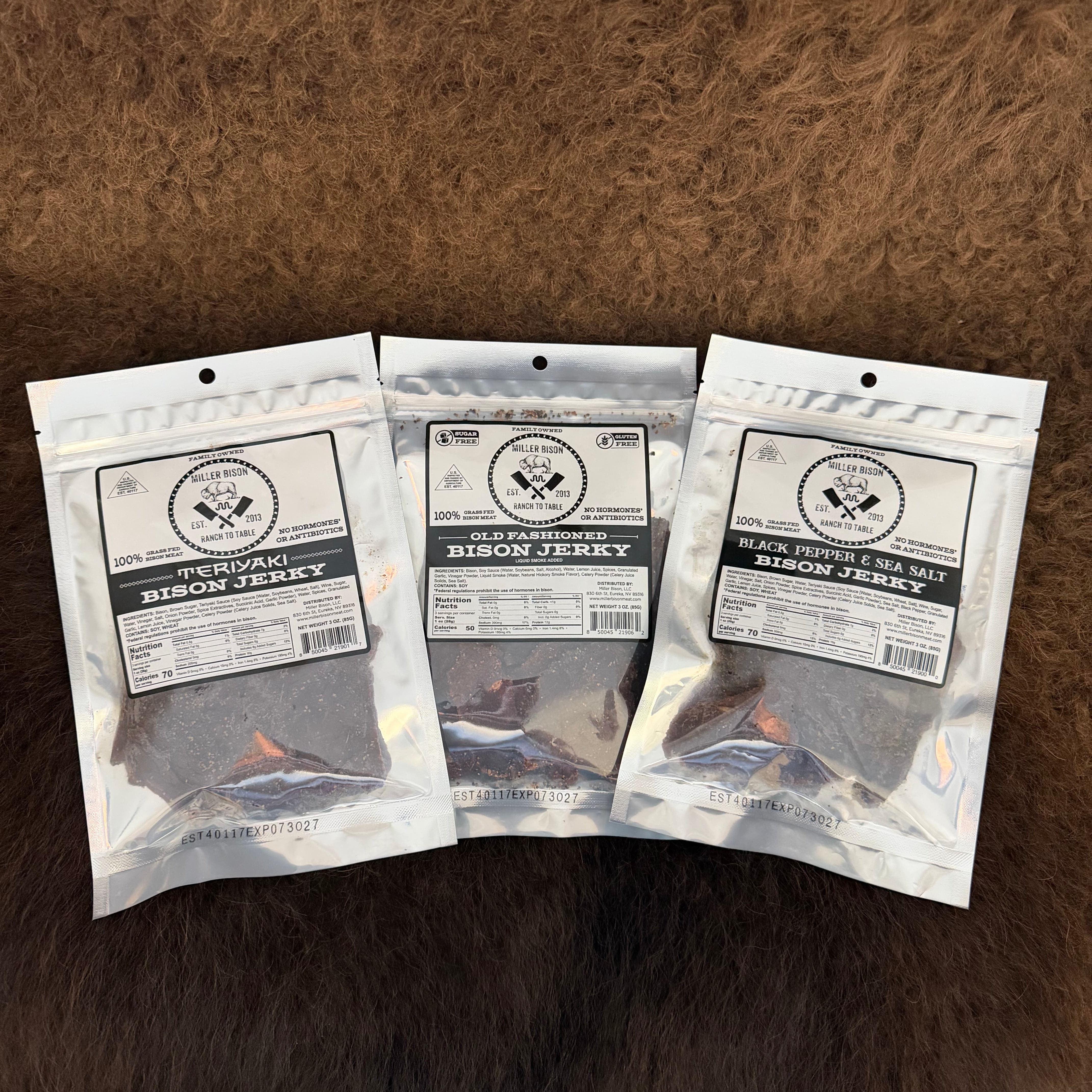
Bison is the easiest of the three to actually buy well. The industry is small but established — you can buy ranch-direct, know the finishing, and get a full range of cuts from ground to brisket to jerky, shipped frozen to any state. Elk shows up at specialty butchers and a handful of online farms with a narrower cut list. Commercial venison is the scarcest and most import-dependent of the three.
Price-wise, all three run premium, for the same structural reasons: small herds, slow growth, no industrial infrastructure — the economics we opened up in our bison pricing breakdown apply across the category. Expect elk and venison to match or exceed bison per pound, with less selection and less sourcing transparency for the money. Bison is where the premium buys the most verifiable animal.
So Which One Belongs in Your Freezer?
Honest scorecard, from people with a horse in the race:
Choose venison if you love bold flavor, know your way around lean meat, or have a generous hunter in the family — it's the connoisseur's pick and the steepest learning curve. Choose elk if maximum leanness is the mission and you cook with a thermometer in hand; it's a beautiful, subtle meat that asks for precision. Choose bison if you want the deepest flavor-per-effort ratio of the three — the one that tastes closest to what you already love, cooks most forgivingly, sources most transparently, and comes in every format from jerky for the gym bag to a tomahawk for the grill.
Or do what plenty of our customers do: eat all three and argue about it. It's a good argument to have. Every animal in it beats the feedlot.
New to the category entirely? Our first bison order guide maps the low-stakes way in — ground first, one good steak second, opinions forever after.
Want to settle the argument with evidence? Call 1-775-318-0366 and Anthony will load you a box. He's tried all three. He raises bison. Draw your own conclusions.

Leave a comment
This site is protected by hCaptcha and the hCaptcha Privacy Policy and Terms of Service apply.